

When Innovation Outran Understanding
In the 1990s, Audemars Piguet released one of the most daring complications in modern horology, a watch that replaced traditional hands with a system of rotating satellites gliding across an arc of hours and minutes.
It was called the Starwheel, a poetic and mechanical masterpiece that few understood when it first appeared.
Collectors praised its beauty but struggled to read it.
Retailers found it mesmerizing but difficult to sell.
And while the watch world moved on, the Starwheel quietly disappeared.
Three decades later, it is back, and this time, people are finally paying attention.
The Birth of a Forgotten Vision
The concept of wandering hours dates back to seventeenth century Rome, when the Campani brothers created it for Pope Alexander VII. But in 1991, Audemars Piguet revived the idea with the modern Starwheel, a wristwatch that turned time into a constantly moving display.
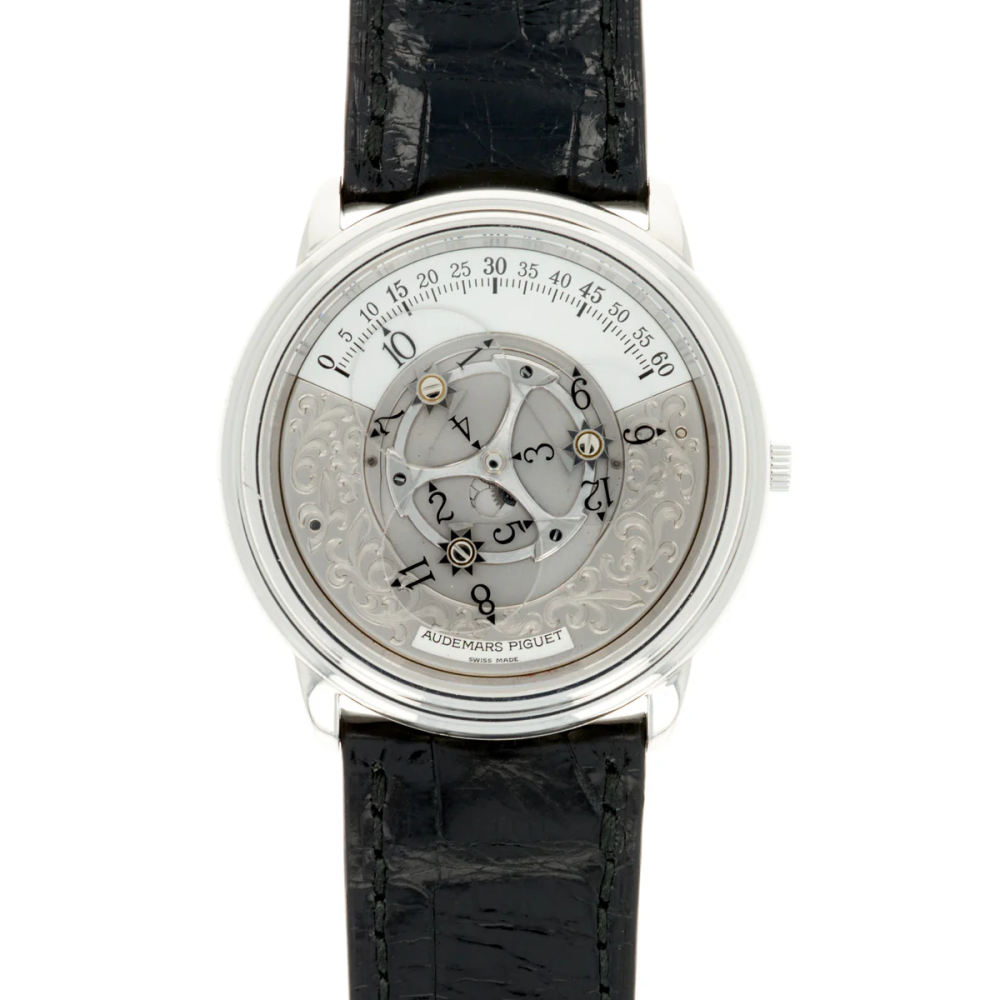
Instead of hands, the watch used three sapphire disks mounted on a rotating carousel. Each disk carried four hour numerals, and as the carousel turned, one hour would sweep across a 120 degree minute arc before the next disk took over.
Time no longer sat still. It drifted. It flowed. It became an experience.
But the world was not ready for it.
A Brilliant Idea Poorly Understood
When the first Starwheel references launched, they were admired for their craftsmanship but misunderstood in function.
The display was unconventional and poetic, yet it demanded engagement. This was not a watch you could read at a glance, and for a world accustomed to simplicity, that was a problem.
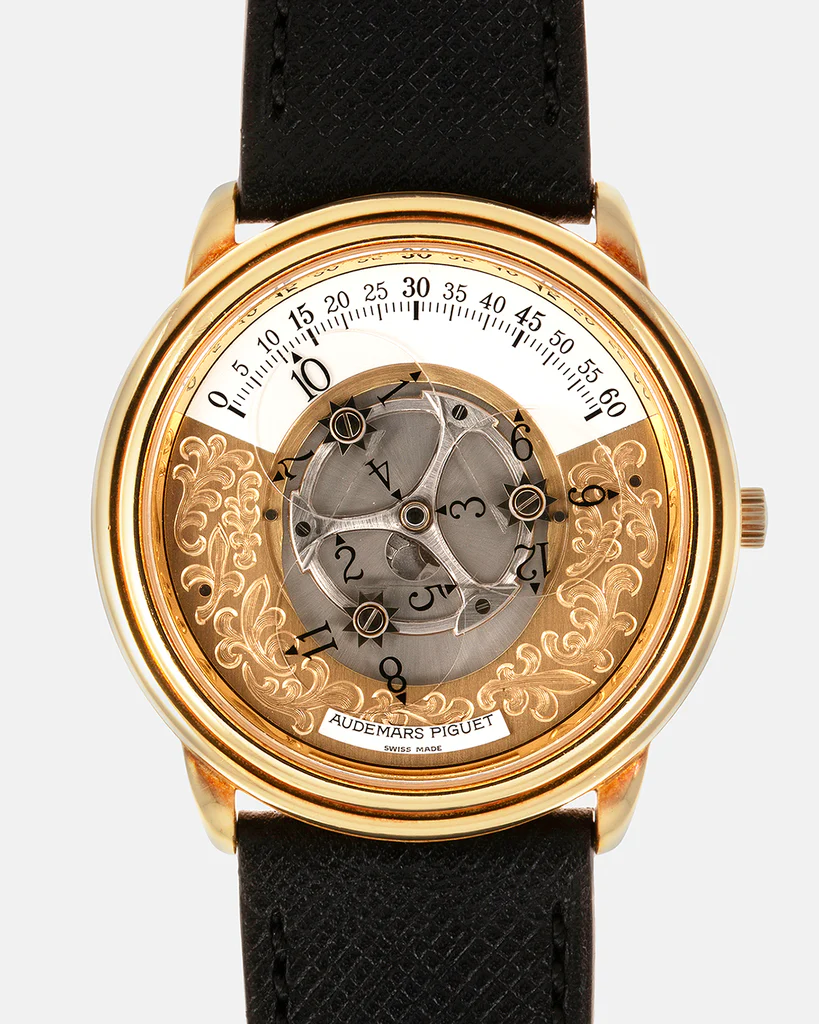
Despite its technical brilliance, the Starwheel never achieved mainstream success. It was too artistic, too misunderstood, and far ahead of its time.
Then came 2022 and a new chance for redemption.
How to Read the Starwheel
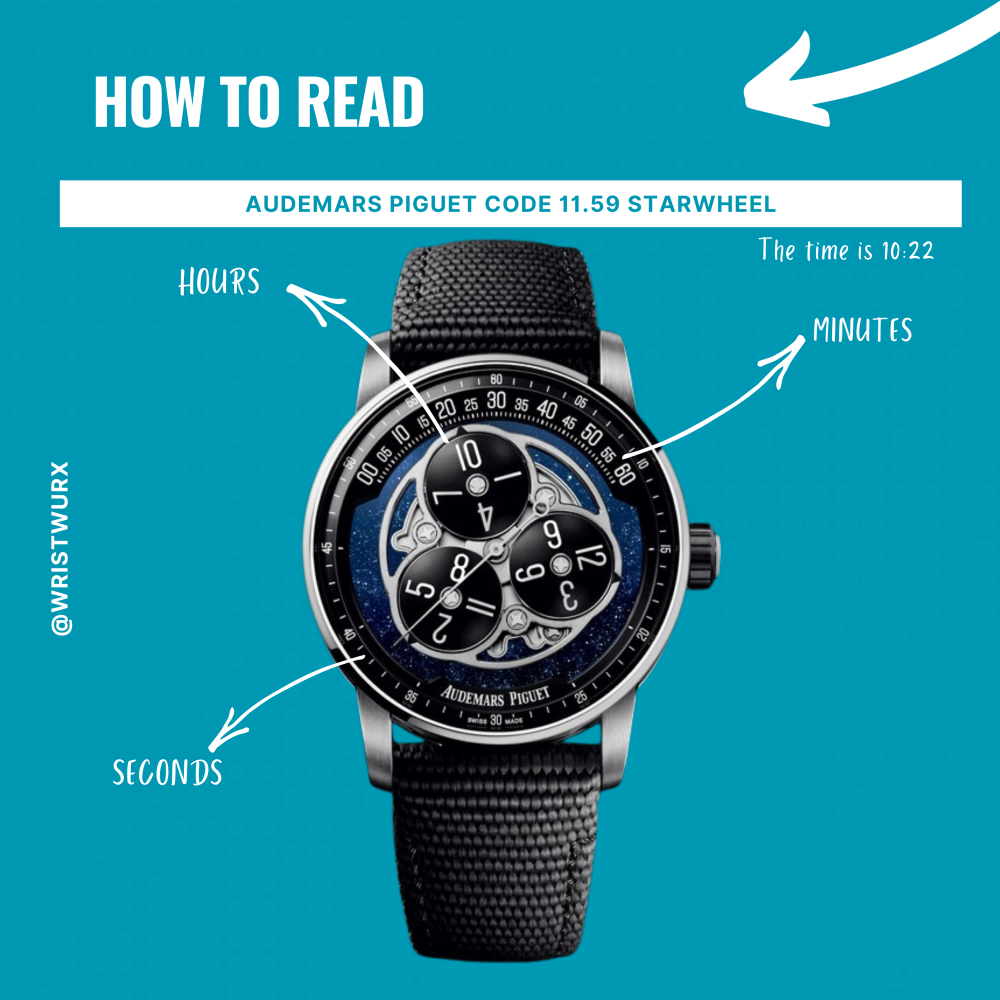
The Starwheel display uses three rotating sapphire disks, each showing four numerals that represent the twelve hours. These disks revolve around the center while turning individually.
At any given moment, one disk moves across the minute arc at the top of the dial.
The hour is shown by the numeral currently crossing the arc.
The minute is read from where that numeral aligns on the scale.
Once the numeral completes its sweep, the next disk takes its place, creating a seamless motion that feels almost celestial.
It looks abstract at first, but once you understand it, the reading becomes second nature and hypnotic.
The Return of the Code 11.59 Starwheel
In 2022, Audemars Piguet brought back the Starwheel within the Code 11.59 collection. It reintroduced the wandering hours concept with modern materials and a new architectural design.
The latest Starwheel features a black aventurine dial, a titanium and ceramic case, and the Calibre 4310 automatic movement. It preserves the floating satellite disks while adding a sense of cosmic depth through the glittering dial surface.
This time, collectors finally understood it. The complication once dismissed as confusing was now recognized as visionary.
Why It Matters
The Starwheel represents what makes Audemars Piguet unique. It challenges convention, redefines legibility, and transforms the act of reading time into an emotional experience.
What once seemed complicated now feels poetic. It is not just about telling time. It is about watching time move.
Closing Thought
The Audemars Piguet Starwheel is a rare story in watchmaking. It was misunderstood, forgotten, and then rediscovered, a reminder that creativity often needs time to be appreciated.
It proves that even in a world obsessed with clarity and conformity, there will always be space for watches that make you stop, think, and feel.