

A legacy of innovation
In the world of haute horlogerie, Audemars Piguet holds a unique place not only for its heritage but for its ongoing commitment to innovation. Rooted in the Swiss village of Le Brassus and founded in 1875, the Manufacture has always balanced tradition with bold leaps into the future.
One of the clearest expressions of this forward spirit is the RD series, short for Research and Development. Through it, Audemars Piguet channels its most daring technical and design ideas, testing new ground before these technologies eventually reach production models.
The RD journey is a masterclass in what research and development should represent: vision, challenge, breakthrough, and legacy. In the next sections, we explore each of the five groundbreaking chapters that shaped this decade of innovation.
Defining Vision: Why the RD Series?
For any strong R&D initiative, you need an objective beyond making the next watch. For Audemars Piguet, the RD series emerged as a platform to experiment without the constraints of standard production cycles.
“Since 2015, Audemars Piguet’s Research and Development series has showcased groundbreaking advancements in watchmaking, blending technical innovation with timeless design.”
That sentence encapsulates three key elements:
- Groundbreaking advancements exploring new territory in materials, complications and ergonomics
- Technical innovation not just aesthetics but engineering and function
- Timeless design ensuring that innovation still respects brand DNA
RD1: Reinventing Sound
Launched: 2015
Focus: Acoustic innovation in minute repeaters
The first RD model, unveiled in 2015, redefined how chiming watches sound and perform. Known as the Supersonnerie project, its goal was to achieve a louder and clearer chime while maintaining water resistance and wearability.

Audemars Piguet collaborated with EPFL in Lausanne and even worked with musicians to study acoustic resonance. The result was a new case construction that amplifies sound, a reimagined gong architecture, and a resonance membrane that projects tone far more effectively.
The technology later appeared in production models such as the Royal Oak Concept Supersonnerie. It was a powerful reminder that innovation begins when you question the limits of what a wristwatch can express.
RD2: The Pursuit of Thinness
Launched: 2018
Focus: Ultra thin perpetual calendar
RD2 took a completely different challenge: miniaturisation. The goal was to create the world’s thinnest self winding perpetual calendar. The movement ended up just 2.89 millimetres thick and the entire watch only 6.3 millimetres in height.
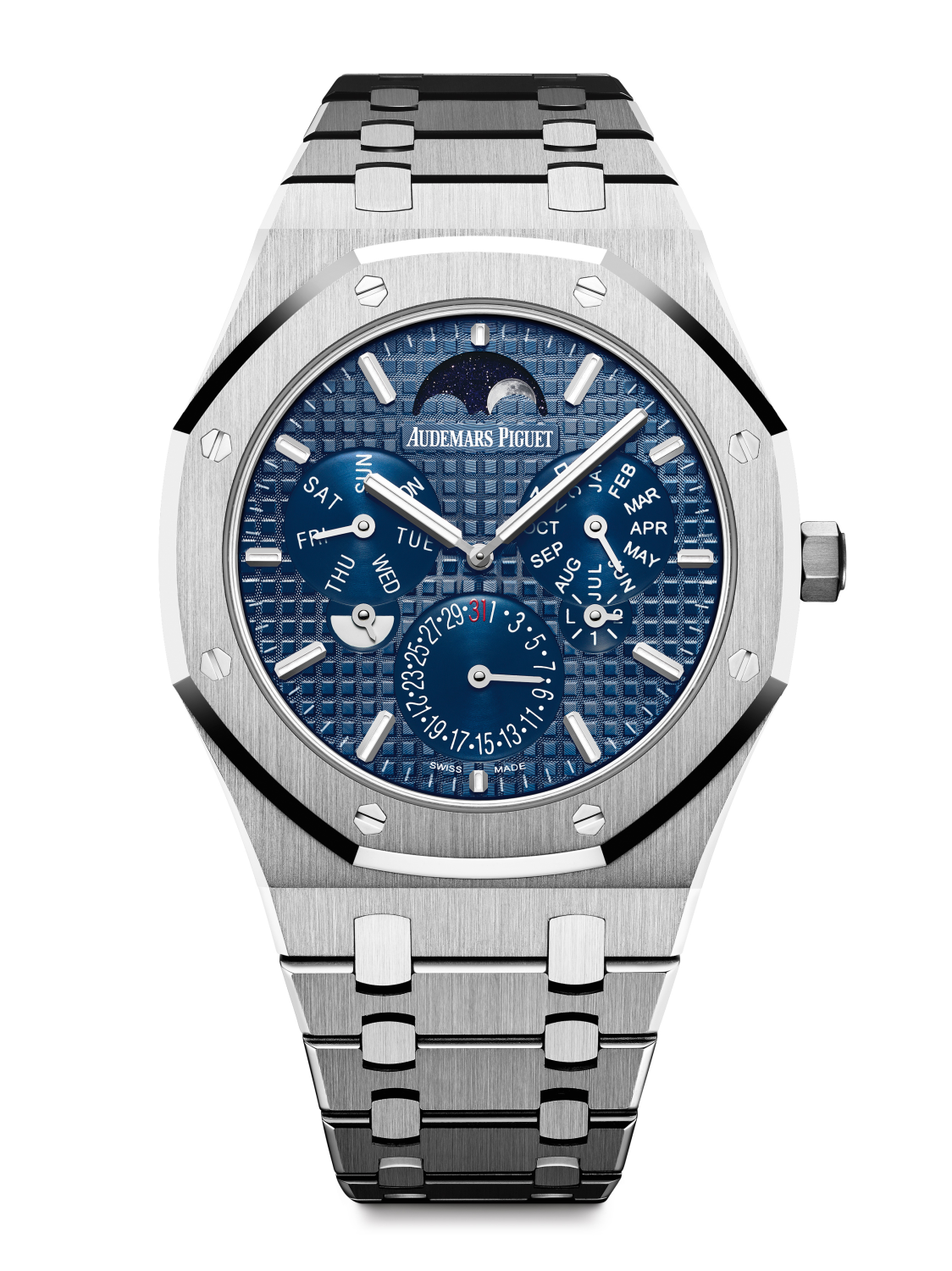
Engineers achieved this by merging layers of the traditional perpetual calendar mechanism onto a single level. This breakthrough eliminated excess thickness while maintaining reliability.
The prototype evolved into the Royal Oak Selfwinding Perpetual Calendar Ultra Thin, proving that refinement and comfort could coexist with mechanical complexity.
RD3: The Flying Tourbillon Evolution
Launched: 2022
Focus: Ultra thin automatic flying tourbillon
RD3 continued the pursuit of elegant engineering. It introduced a flying tourbillon into the ultra thin Royal Oak format, celebrating the model’s 50th anniversary.
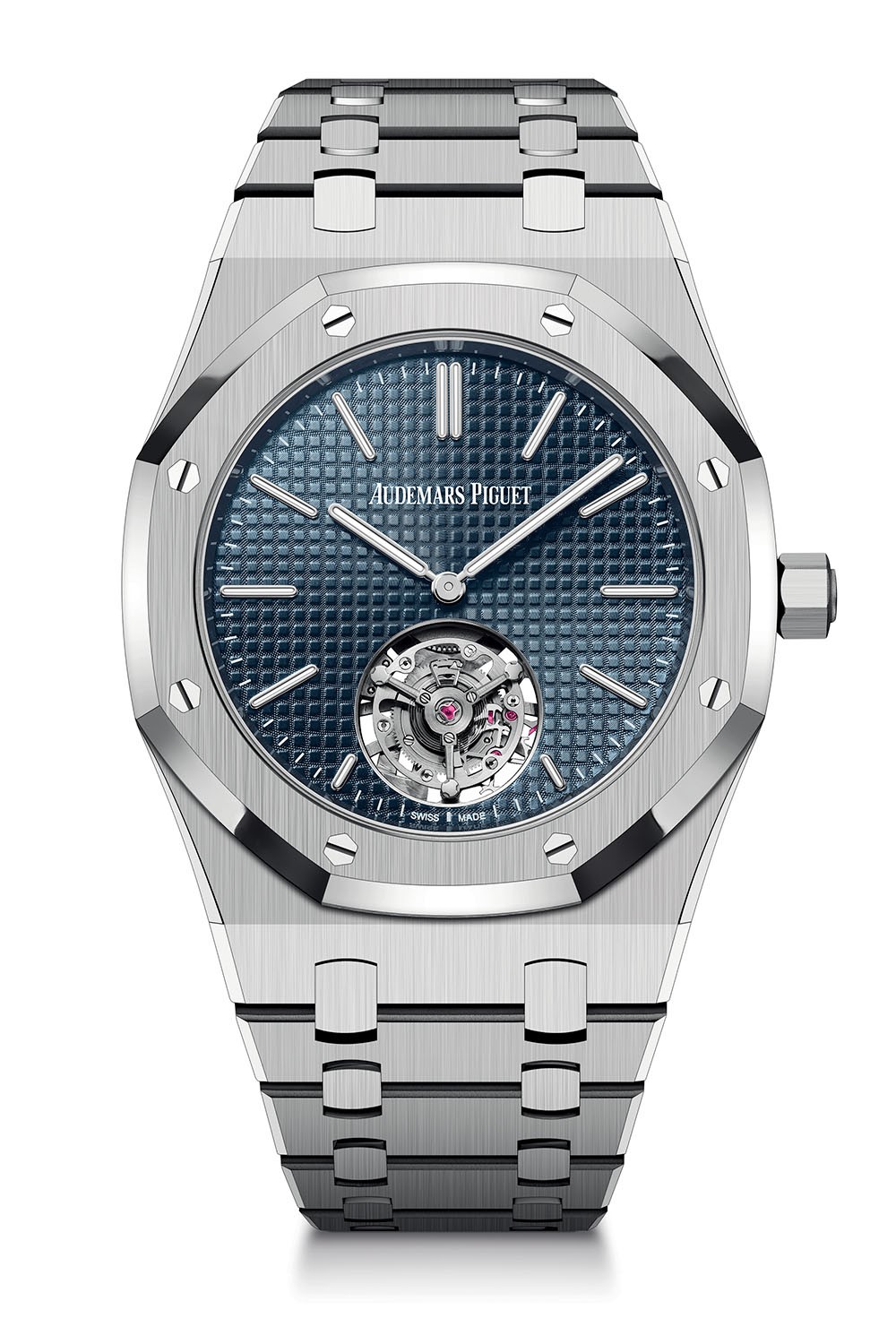
The new calibre combined a tourbillon cage and oscillating weight on a slim profile without sacrificing amplitude or precision. This allowed Audemars Piguet to deliver the visual poetry of a tourbillon while maintaining the balance and wearability expected from a daily timepiece.
Beyond aesthetics, the RD3 established the foundation for later movement improvements related to energy efficiency and thinness.
RD4: The Ultimate Complication
Launched: 2023
Focus: Integration of 23 complications and 40 functions
RD4 marked Audemars Piguet’s most ambitious project yet. Introduced within the Code 11.59 line, the Universelle RD4 became one of the most complicated wristwatches ever created.
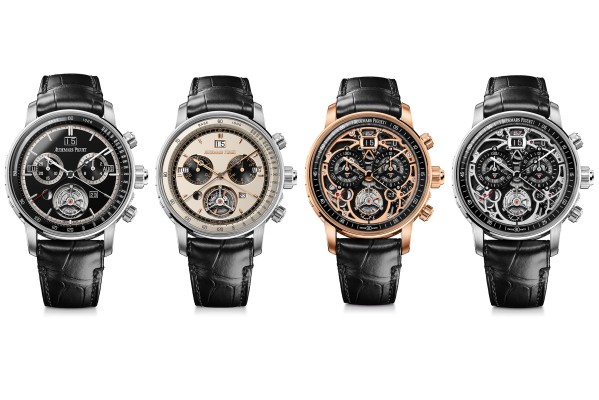
It combined a grande and petite sonnerie, minute repeater, split seconds chronograph, perpetual calendar, tourbillon, and several automatic systems within a single self winding calibre. The movement, known as Calibre 1000, featured more than one thousand components yet was housed in a 42 millimetre case designed for comfort and legibility.
Despite its mechanical density, usability remained a core focus. Pushers and selectors were optimised for intuitive operation, demonstrating that even the most complex mechanism can remain human centric.
RD5: The Modern Chronograph Redefined
Launched: 2025
Focus: Chronograph ergonomics and integrated flying tourbillon
RD5 closes the RD chapter with an extraordinary combination of artistry, heritage and technology. Presented in a 39 millimetre Royal Oak Jumbo case only 8.1 millimetres thick, the watch unites a flying tourbillon and a chronograph in an extra thin automatic form.

The movement, Calibre 8100, introduces a newly engineered reset system and pushers designed with tactile precision in mind. The feel of each press was studied and tuned to match the responsiveness of high end camera or smartphone buttons.
Crafted in titanium and bulk metallic glass, the RD5 represents both lightness and strength, a fitting finale for a decade of experimental excellence.
With RD5, Audemars Piguet officially concluded the numbered RD series, transitioning toward a continuous innovation era under its Fabrication Laboratories initiative.
Lessons from a Decade of Innovation
Across RD1 to RD5, Audemars Piguet’s research and development philosophy reveals six enduring lessons.
1. Bold objectives inspire real progress. Each RD project began with a single challenging question that drove years of development.
2. Collaboration is crucial. Engineers, scientists, and even musicians worked side by side to achieve acoustic and mechanical breakthroughs.
3. Design for wearability. From sound projection to thinness, every innovation served the user experience.
4. Tradition and progress can coexist. The Royal Oak’s design language remained untouched even as its internals were reimagined.
5. Prototype thinking is essential. RD watches are not final products but platforms for the ideas that shape future collections.
6. Innovation should be human. Ergonomics, sound, and feel remind us that emotion is part of engineering.
The Legacy of the RD Series
Each RD model contributed something permanent to the Audemars Piguet story.
- RD1 gave us the Supersonnerie.
- RD2 introduced the world’s thinnest perpetual calendar.
- RD3 perfected thin tourbillon architecture.
- RD4 merged over twenty complications into a wearable case.
- RD5 refined the chronograph experience and closed the circle of experimentation.
Together they chart a journey that mirrors how true R&D should work in any field: define a mission, test relentlessly, learn from each iteration, and bring those insights into production.
Closing Thought
The RD series is not just a line of concept watches. It is a decade long study in how vision, patience, and precision can redefine an entire industry.
Each model stands as a symbol of curiosity turned into craftsmanship, and of heritage evolving through innovation. It is a reminder that progress, when guided by purpose, can become timeless.
If this story resonates with you, follow WRISTWURX for more insights into the world of fine watchmaking, innovation, and the ideas shaping the next generation of timepieces.