
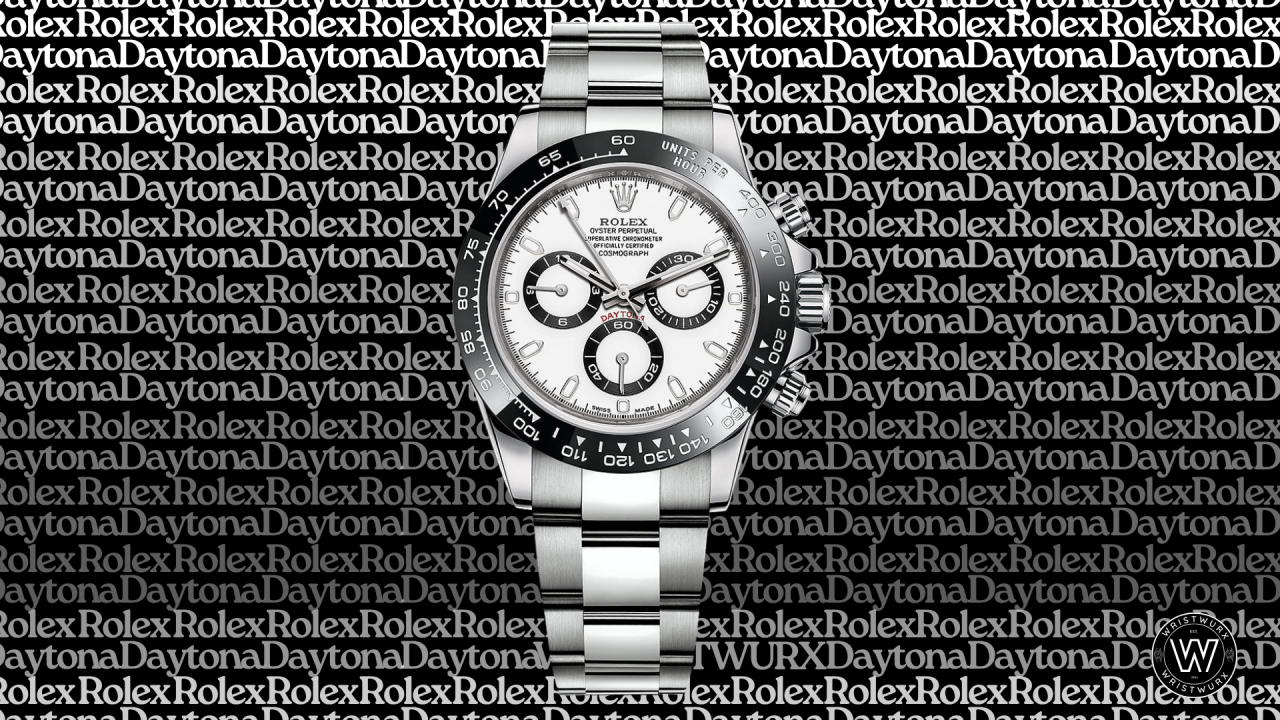
A Legacy Born on the Track
In 1963, Rolex introduced the Cosmograph Daytona, a chronograph designed for professional race car drivers. Its purpose was clear: to measure elapsed time and calculate average speed with absolute precision.
Named after the famous Daytona International Speedway in Florida, the watch represented the golden age of motorsport. But over the next sixty years, it evolved far beyond the racetrack, becoming one of the most sought-after and recognisable timepieces ever created.
The First Generation: 1963 to 1988
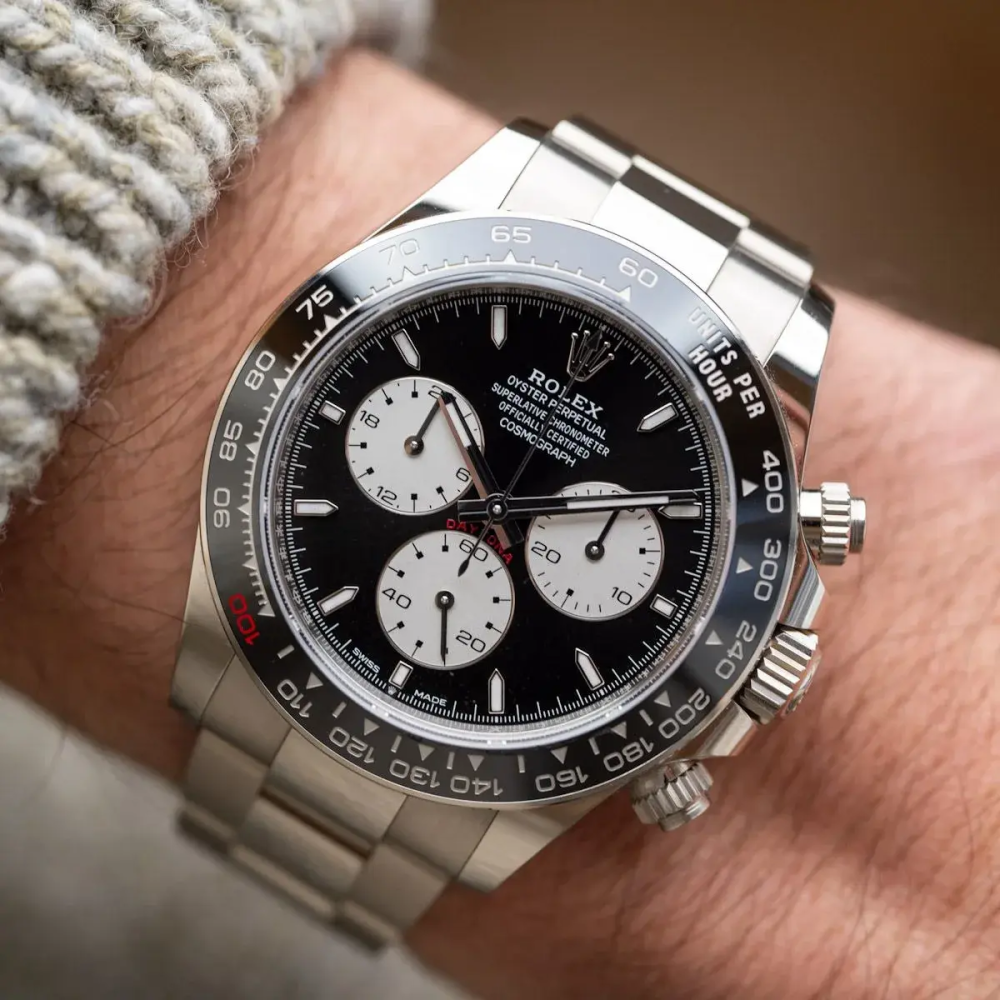
The earliest Daytonas, starting with reference 6239, defined the watch’s signature look: contrasting sub-dials, tachymeter bezel, and the bold red “Daytona” logo across the dial.
Powered by hand-wound Valjoux movements, these watches were technically sound yet initially slow to sell. That changed when actor and racing enthusiast Paul Newman famously wore his own Daytona, sparking one of the strongest collector cults in horology.
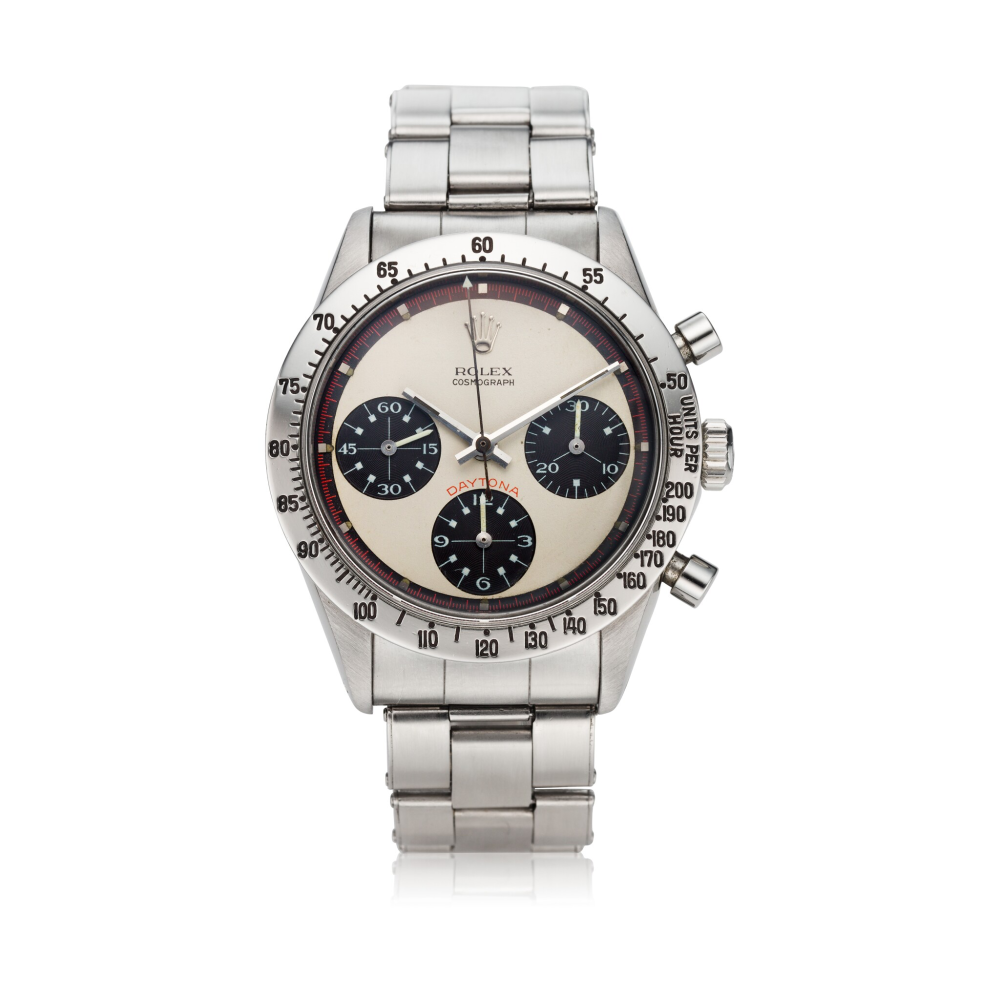
Today, vintage “Paul Newman” Daytonas are considered among the most valuable watches in the world, with auction prices exceeding several million dollars.
The Zenith Era: 1988 to 2000
The modern Daytona story truly began in 1988 with the release of reference 16520. Rolex transitioned to an automatic movement based on the legendary Zenith El Primero calibre, which it heavily modified to meet its strict performance standards.
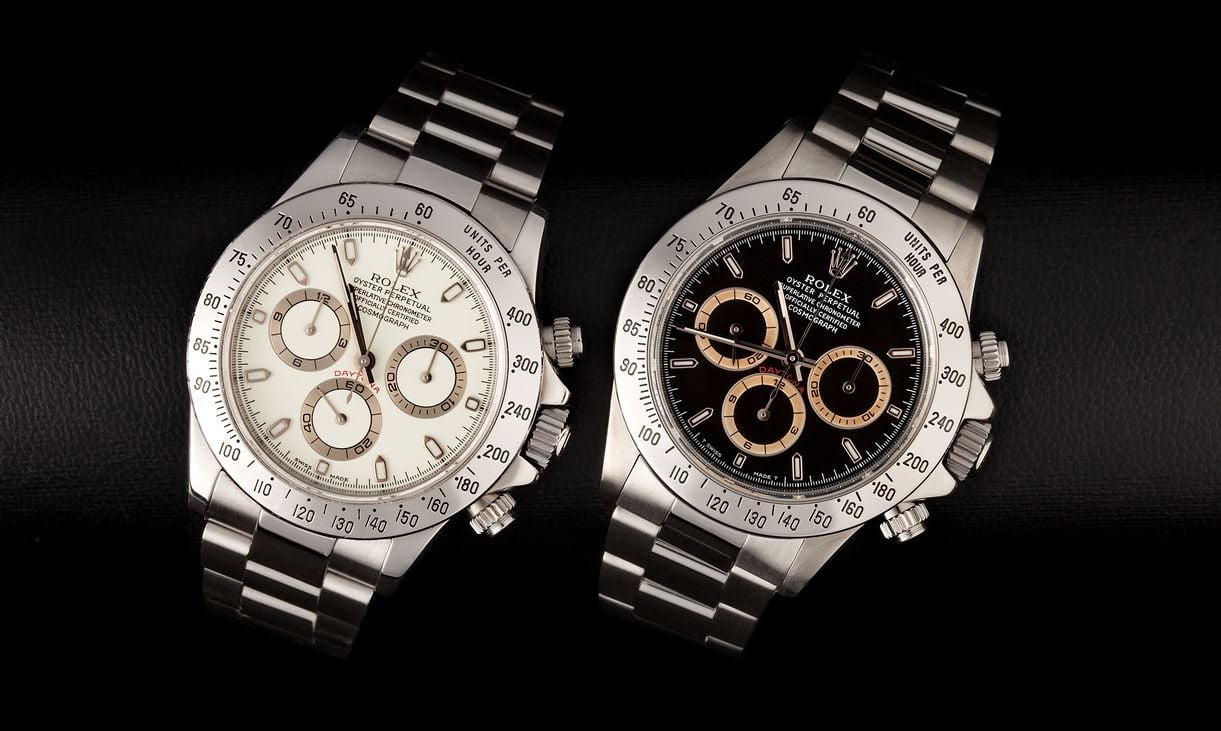
This update transformed the Daytona from a niche racer’s tool into a mainstream luxury chronograph. The proportions became more refined, the dial more balanced, and the legend began to grow.
The In-House Revolution: 2000 and Beyond
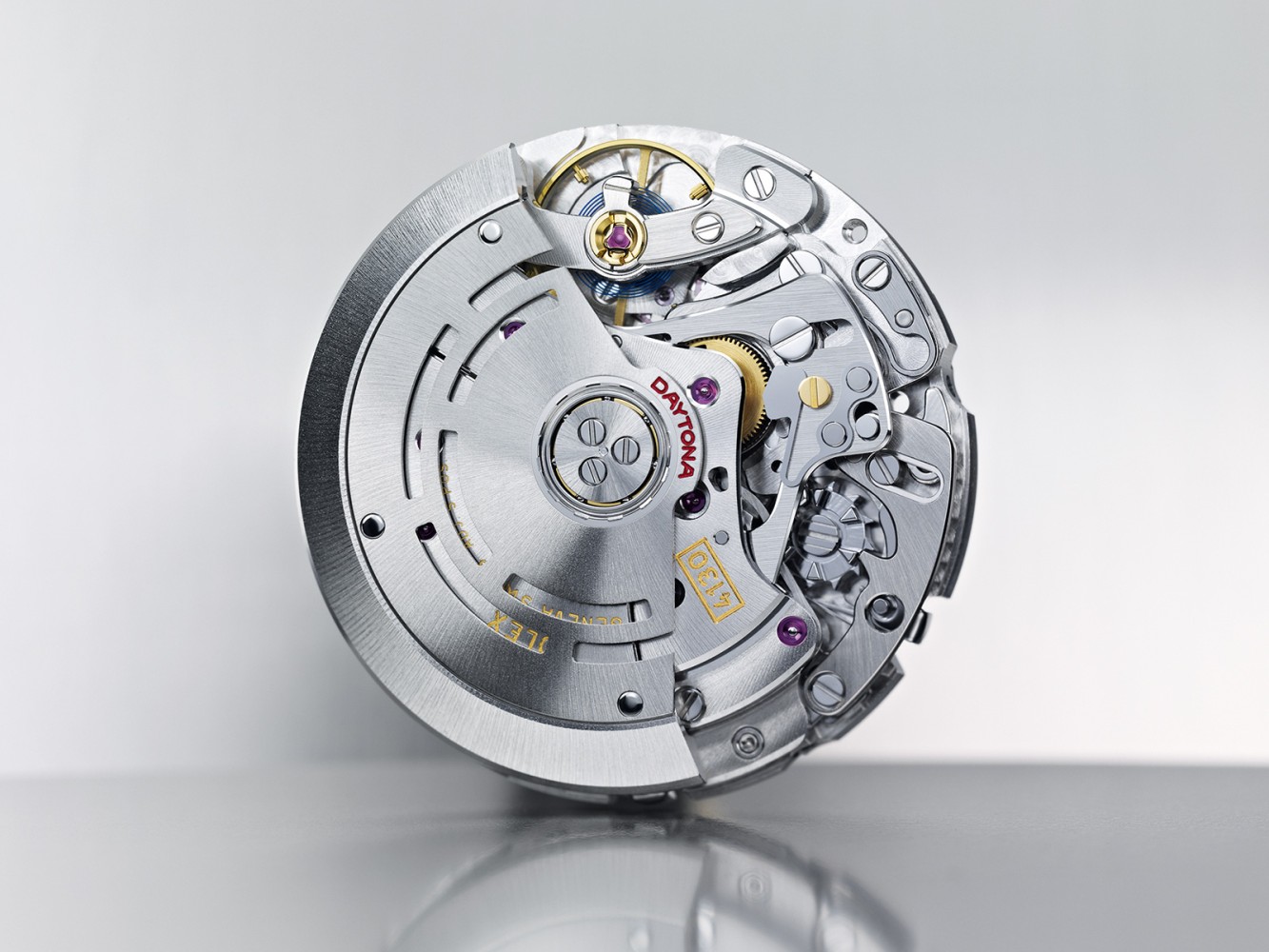
In 2000, Rolex unveiled its own movement, the Calibre 4130, built entirely in-house. It was a technical masterpiece: fewer components, greater reliability, and superior efficiency.
This move elevated the Daytona into a league of its own, a chronograph engineered with the same meticulous precision that defines every Rolex innovation.
Subsequent generations introduced modern upgrades such as the Cerachrom ceramic bezel, offering unmatched scratch resistance and color longevity. The movement evolved again in 2023 with the Calibre 4131, refining finishing and energy efficiency while remaining faithful to the Daytona’s design DNA.
Why the Daytona Endures
The Daytona is more than a watch. It represents the perfect intersection of performance, prestige, and purpose.
- Engineering excellence: From the tactile feel of the pushers to the accuracy of its chronograph, every detail serves function before form.
- Heritage with restraint: Despite decades of innovation, its silhouette remains instantly recognisable.
- Cultural resonance: Worn by icons, racers, and collectors alike, it carries a story that transcends generations.
- Rarity and demand: With waitlists stretching years, it continues to symbolise both achievement and exclusivity.
Closing Thought
The Rolex Daytona began as a professional instrument for the racetrack and evolved into a global emblem of excellence. Its story is one of endurance, precision, and timeless design , a reminder that true icons are built through evolution, not reinvention.
For watch enthusiasts and collectors, the Daytona is not simply a chronograph. It is the measure of progress, craftsmanship, and legacy on the wrist.